
"remote control coffee"
400 article(s) found

The Ethiopian single producer plan introduces how the Sidamo production area is divided into sub-production areas.
Coffee in Ethiopia usually follows one of two ways: real estate coffee or collective land. It is easier to understand (but harder to encounter) the production path of manor coffee grown and sold in the name of the manor. The supply chain of Ethiopian manor coffee is largely similar to that of Central America because the farm is made up of wealthy Ethiopian nationals or Ethiopian countries.

A brief introduction to the treatment method of grinding degree and baking degree of Colombian boutique coffee beans with balanced taste
English name: Colombia huila Huilan Coffee Raw Bean Commodity Specification: 1000 grams Coffee country: Colombia handling method: washing Coffee Grade: 18 years of production: 2013 in the Huila,SI trading company recommended that farmers use biological control methods to control diseases and insect pests and maintain the cultivation of the old species of typica, as well as to continue the tradition of cultivation! Because Huila is located in the country
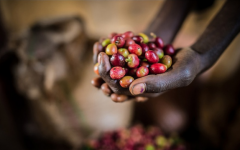
Treatment method of grindability and baking degree of Essel sun Yega Sheffield G1 Jieti Pwauka boutique coffee beans
Ethiopia Natural Yirgacheffe Gedeb Woka G1 country: Ethiopia grade: G1 production area: Gedeb Jettip baking degree: light baking method: insolation in 1959, South American water washing was introduced into the Yegashifi producing area, and most producing areas are generally treated with water washing, that is, the coffee fruit is peeled, and the pectin layer is removed after fermentation and washing.

What is Yemeni coffee? What are the growing characteristics of Yemeni coffee?
For more information on coffee beans, please follow the coffee workshop (Wechat official account cafe_style) Yemen is located in Asia, south of Arabian Peninsula, bordered by Saudi Arabia (Saudi Arabia) to the north, Oman (Oman) to the northeast, the Red Sea (Red Sea) to the west, and the Gulf of Aden (Gulf of Aden) to the east and south.

Characteristics of Flavor and Flavor of Fine Coffee beans in Waka processing Plant in Ethiopia Solar Yega G1 Jietipu area
Factory name: coffee workshop address: Guangzhou Yuexiu District manufacturers contact information: 20-38364473 shelf life: 90 net content: 227g packaging: raw maturity of bulk coffee beans: coffee cooked beans contain sugar: sugar-free origin: Ethiopia roasting degree: light roasting Ethiopia Natural Yirgacheffe Gedeb Woka G1 country: Ethiopia grade: G1 production

The difference between Columbia Huilan and Na Linglong. How much is a cup of Columbia Linglong coffee?
For more information on coffee beans, please follow the Coffee Workshop (Wechat official account cafe_style). To the west of Colombia is the Andes, divided into three parts: the western, central and eastern mountains. The Cauca and Magdalena rivers flow along the Caribbean to the lowland plains. Colombia is currently the third largest coffee producer in the world and is treated with water.

Description of Coffee Flavor and aroma in Humbela Town, G1 Valley, Sidamo, Ethiopia
For the exchange of professional baristas, please follow the coffee workshop (official Wechat account cafe_style) product name: Ethiopia washed Humbela town (Ethiopia Sidamo Guji Hambella washed G1), Sidamo G1 valley district, Ethiopia (Ethiopia) producing area, Oromia Region (Oromia Region), Guji Zone (Humbera town) (Hamb)

The advantages and disadvantages of opening a coffee shop
Coffee shop proprietary advantage 1. The cost of investment can be controlled by itself. 2. Entrepreneurs are flexible in management, for example, they can customize menus according to their needs, and the decoration style in the store can show more personality or local characteristics. 3. The bedding work such as material purchase, shop location and location is complicated in the early stage. The coffee shop is not self-supporting. 1. It has higher requirements for the professional and management ability of entrepreneurs. 2. Single purchase, cost

How to describe the flavor of Gucci coffee beans _ Guji Timtu Coffee introduction _ what is the price of Gucci coffee beans
Professional coffee knowledge exchange more coffee bean information please follow the coffee workshop (Wechat official account cafe_style) Ethiopian coffee is mainly produced in eight major areas: Ekempti, Limu, Illubabor, Djimma, Harrar, Teppi/Bebeka, Sidamo, Yirgacheffe. Ethiopian coffee is highly rated in China, especially in Ethiopia.

Coffee characteristics of Guji producing area in Ethiopia what is the difference between Guji producing area and Yega Xuefei?
Professional coffee knowledge exchange more coffee bean information Please follow Coffee Workshop (Wechat official account cafe_style) the Guji producing area of southern Ethiopia is next to the Sidamo and Gedeo areas, the territory is straddled by towering mountains, highlands, highlands, valleys and plains and offers diverse topography. The geology of this area belongs to volcanic soil with rich nutrients and good drainage.

Mexican Coffee Flavor characteristics Historical Story Fine Coffee Development Mexican Coffee Industry is facing crisis
Mexico is often excluded when people list famous coffee producing areas. There's no Mexican coffee on the bean list on the front street. But there is no denying that Mexican coffee has many advantages: unique fruity characteristics, positive social and environmental impacts and rich traditions of coffee production. Coffee first arrived in Mexico in the late 1700s and was settled by Spain

Introduction of Rose Xia Village (Geisha Village) Manor Sun Sun Geisha Flavor description of Rose Xia Village in Ethiopia
Professional coffee knowledge exchange more coffee bean information please follow the coffee workshop (Wechat official account cafe_style) Rose Summer Coffee description [coffee blossom, peach, lemon black tea tail rhyme] Columbia Hope Manor Geisha | washed beans (Washed Geisha La Esperanza Colombia) producing area / Manor: Valle de Cauca/ Hope Manor (La Esperanza)

Kenya Coffee Bean planting History location and Flavor description
For professional baristas, please follow the coffee workshop (Wechat official account cafe_style) Kenya (Kenya) is located in eastern Africa, adjacent to Ethiopia, the source of coffee. Despite the fertile soil, coffee was first grown in the country when Bourbon (French mission) was introduced from Brazil in 1893 in memory of French missionaries; it was like walking to the left and to the right.

Coffee Bean planting History and Flavor characteristics in Kenya
For professional baristas, follow the coffee workshop (Wechat official account cafe_style). Coffee trees in Kenya can blossom twice a year. Most coffee trees bloom in March and April after the long rainy season, and in most coffee producing areas, the harvest season lasts from October to the end of the year. Some coffee trees blossom in October or November and are harvested in July of the following year.

Kenya coffee beans single bean introduction grading standard flavor description
For professional baristas, follow the coffee workshop (Wechat official account cafe_style). Coffee trees in Kenya can blossom twice a year. Most coffee trees bloom in March and April after the long rainy season, and in most coffee producing areas, the harvest season lasts from October to the end of the year. Some coffee trees blossom in October or November and are harvested in July of the following year.

Grading, price, raw beans and baking curve of Kenyan coffee
Communication of professional baristas Please follow the coffee workshop (Wechat official account cafe_style) Kenya coffee individual bean classification, price, raw beans and baking curve as for the quality distinction, Kenya uses digital grading method to distinguish the quality of coffee, but this digital grading method is not much promoted, so few people know about it. Therefore, the classification of particles is much more important.
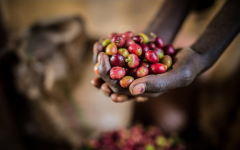
The story and allusions of Esther sunning the boutique coffee beans of Jejopwauka G1
Communication of professional baristas Please pay attention to the Coffee Workshop (Wechat official account cafe_style) in 1959, South American water washing was introduced into the Yega Xuefei producing area. Most producing areas generally use water washing treatment, that is, after the coffee fruit is peeled, the pectin layer is removed after fermentation and washing process, and then air-dried. Since 2006, some coffee processing plants in some producing areas have adopted exquisite elevated shed days.

Fragrant Indonesian Manning Coffee Flavor and Taste introduction of boutique coffee beans in manor producing area
Since 1968, especially after the adjustment of the economic structure and product structure in the 1980s, the Light Rail Exhibition in Jakarta has made some achievements. In the first 25-year long-term construction plan, GDP grew at an average annual rate of 6%, and inflation was controlled within 10%. In April 1994, we entered the second 25-year long-term construction plan, that is, the stage of economic take-off. Government advance

History, culture, stories and allusions of Kenyan coffee boutique beans
The exchange of professional baristas please follow the coffee workshop (Wechat official account cafe_style) the history, culture, stories and allusions of Kenyan coffee boutique beans that allow farmers to earn what they deserve is the basic belief of the coffee boutique movement. Although Cup of Excellence is currently the most representative and transparent competition in the industry, many of the details are actually modelled on Kenya's past life.

Hand-made Guatemalan coffee the most special producing area of Guatemalan coffee Vivetnam fruit high-altitude coffee
Professional coffee knowledge exchange more coffee bean information please follow the coffee workshop (Wechat official account cafe_style) Guatemala coffee industry Guatemala coffee beans Guatemala coffee recommended brewing advice (provided by Nor): water temperature: 90-95 degrees Celsius 30g coffee powder coffee, 500g water grindability: medium thickness first stew: 60g water / 30 seconds, then rinse